Flexible project entry · dependable scale-up • Global soap manufacturing support
Flexible project entry · dependable scale-up • Global soap manufacturing support

A good soap box has to suit the bar inside, the way it is sold and the journey to the buyer. Start by deciding whether the soap will be individually wrapped or placed directly inside the box, whether customers need to see or smell it, and whether the pack is for a retail shelf, a gift set or parcel delivery. Those decisions narrow the choice of paper, surface finish and internal support.
This guide helps private-label buyers compare materials and plan a packaging sample. It treats protection and environmental claims as features to verify on the finished pack, not conclusions that follow from a material name. The checks below are purchasing recommendations, not a claim that every option is suitable for every SOVARUNE order.
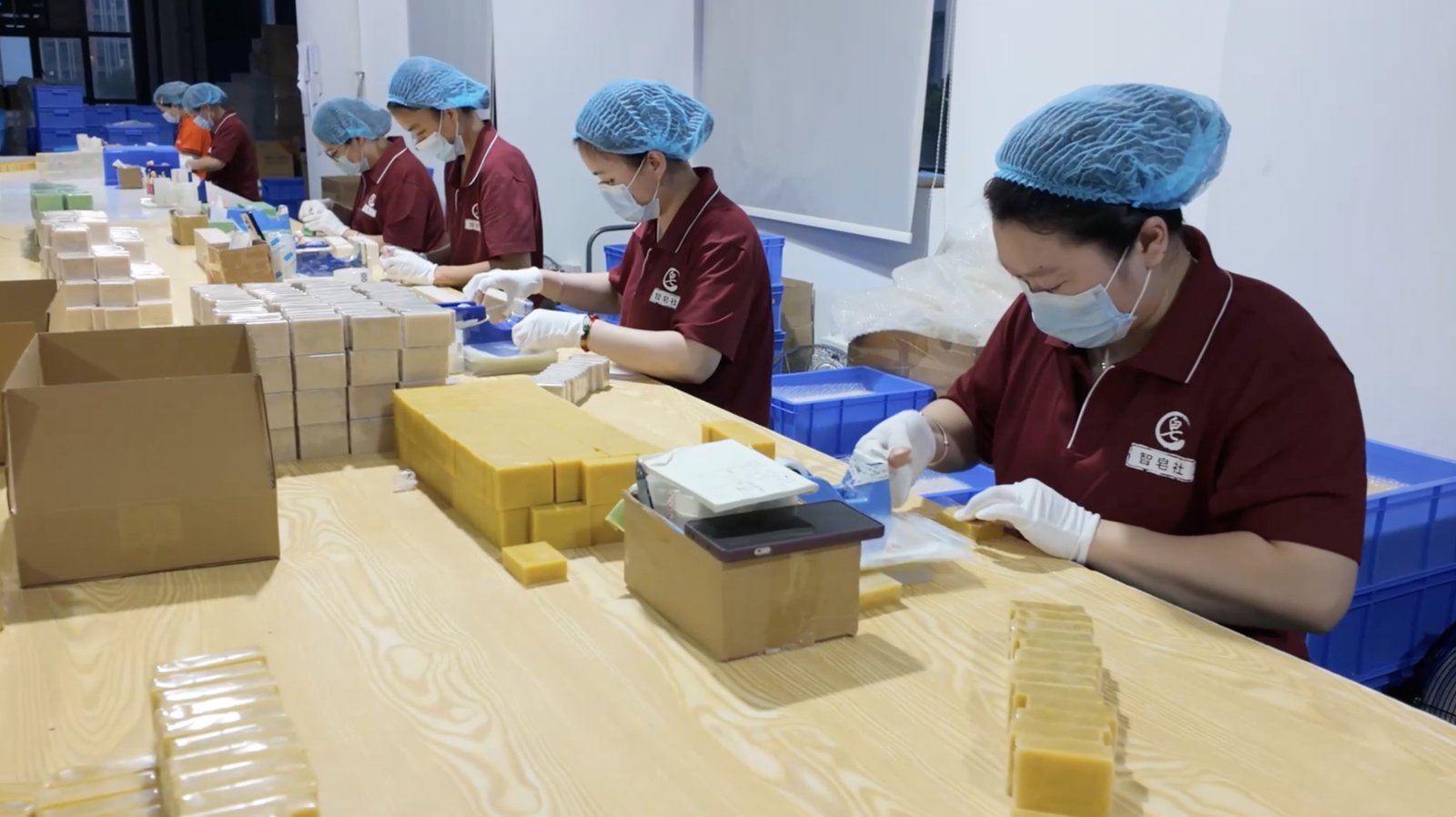
Pale yellow soap bars and wrapped bars beside a worker at a packing table.
Kraft paper is a starting point for natural-look branding. Before selecting it from a swatch, evaluate printed colour using your actual artwork: a brown background is part of the design, not a substitute for a printed proof. Put small text, the logo and the most important colour on the proof so the approval addresses the details customers will see.
White paperboard is worth comparing for detailed colour artwork and a clean background. Use the same design on shortlisted boards and examine fine print, folds and the chosen finish together. Artwork clarity matters more than approving an attractive blank box that has never been printed.
Micro-corrugated board is an option to evaluate for multi-bar packs and transport protection. Judge the assembled pack with the intended number of bars and any insert, including how much the contents can move. Choosing this construction alone should not be taken as approval to omit an outer shipping box.
Textured paper brings tactile presentation into the decision. Obtain an actual paper sample and a printed sample: a texture that looks right on screen still needs a legibility check on small type and any foil detail. Select it for a specific visual and handling effect, rather than using texture as a general promise of higher quality.
| Paper option | Selection priority | Sample focus |
|---|---|---|
| Kraft paper | natural-look branding | printed colour |
| White paperboard | detailed colour artwork | Artwork clarity |
| Micro-corrugated board | multi-bar packs | transport protection |
| Textured paper | tactile presentation | legibility check |
Matte or gloss lamination adds a film layer to the paper surface. Aqueous coating or varnish is another finish to compare. Specify which surfaces receive the treatment, especially if the soap will sit directly inside the box. An exterior finish is not evidence that the inside surface will resist marks from the particular bar.
For the sample comparison, place the intended soap and any inner wrap in each shortlisted construction. Agree a storage period and conditions representative of your project, then record visible marks, softening, sticking or changes to the printed surface. Photograph the same areas before and after. Use the result to select the construction; do not replace that check with a blanket moisture-proof or grease-proof description.
Hot foil stamping can highlight a logo or selected design detail, while spot UV creates a glossy area within the design. Keep those decorative decisions separate from the protection requirement. On the printed sample, inspect the edges of the foil or UV area, its position against the artwork, and whether the effect obscures small text.
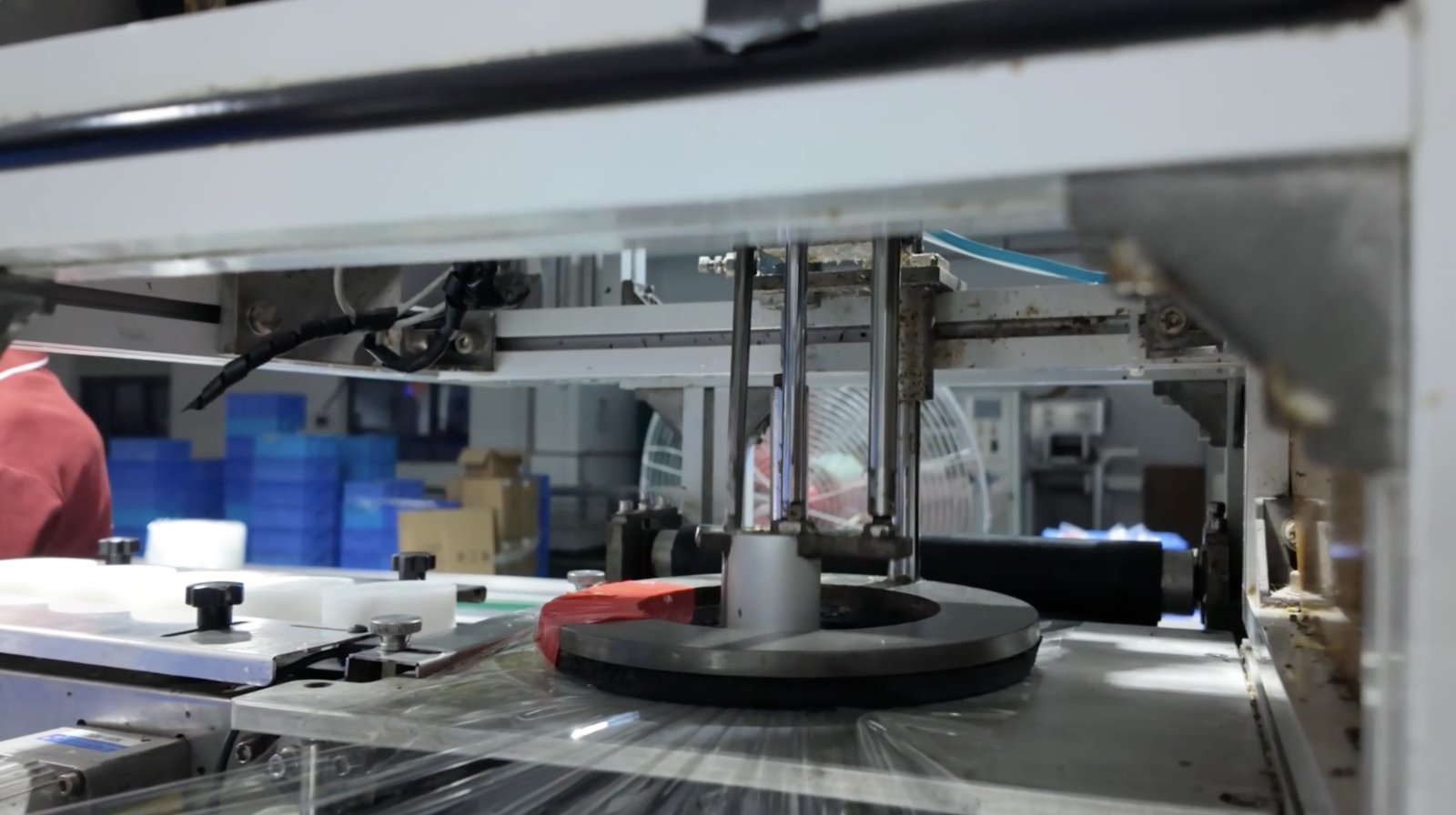
A close-up view of packaging-floor equipment; the photograph does not identify its precise function.
Start with the exact claim you want to make. Is the priority the paper source, reduced use of film, an unglazed window or a disposal statement? List every component of the proposed pack, including the box, coating, window, liner and adhesive. Evaluate the complete construction before approving environmental wording.
If FSC-certified paper is specified, request documentation covering the proposed material and the wording intended for the pack. A preference for certified paper is not evidence that SOVARUNE or every packaging option has that certification. Do not treat it as a universal purchasing requirement for all US or European buyers.
For soy- or vegetable-based ink, obtain the ink specification and support for any proposed emissions or disposal claim. The ink description alone is not sufficient grounds to label the finished box low-VOC or recyclable. Likewise, a water-based finish should not automatically become a 100% recyclable claim in the artwork.
An open die-cut window removes the need for a window film, but leaves an opening to assess for product exposure and handling. If a film-covered window is preferred, request the exact film specification and evidence for any biodegradable or compostable wording. Terms such as cellophane or plant-based do not settle the disposal claim. Verify any consumer-facing claim for the finished construction and intended market before printing.
Build the fit sample around the soap in the condition in which it will be packed, including its inner wrap or liner. Record the measured bar dimensions, proposed box internal dimensions and the fit result. A universal shrinkage percentage or fixed clearance cannot replace checking your own bar and construction.
Try inserting and removing the bar, closing the pack and handling it in its intended orientation. A tight fit, a closure under pressure or a bar moving against an edge gives the designer a specific problem to solve. Evaluate an insert or a different box structure against that problem, then repeat the fit check with the revised sample.
For delivery, evaluate the complete arrangement: individual box, insert if used, quantity per shipping carton and outer protection. Define the shipment conditions and acceptance criteria with the supplier before approving the design. Keep photographs of corner damage or movement and identify the packaging revision used; these make the next correction more useful than a general request for a stronger box.
Use a single approval sheet that identifies the soap sample, paper selection, internal dimensions, inner wrap or liner, surface treatment and artwork revision. Attach the printed sample photographs and note the result of the fit, appearance and handling checks. Mark unresolved items individually instead of approving the entire pack on appearance alone.
When a component changes, revisit the checks that depend on it. For example, changing the bar or inner wrap calls for a new fit comparison; changing the paper or finish calls for another printed sample assessment. The purpose is to carry one agreed specification into the next stage, with a clear record of what was actually approved.
SOVARUNE’s minimum order for one-stop custom soap with printed colour boxes is 1,000 pieces. Custom unboxed soap starts at 500 pieces, and stock soap wholesale at 50 pieces. These are different purchasing routes; the figures do not establish a minimum for a standalone packaging order or how mixed designs are counted.
The confirmed fee for combined soap, colour-box and label sampling is CNY 1,000, fully credited toward a subsequent bulk order. CNY 200 applies to custom bare-soap sampling. For a packaging project, prepare the box dimensions, design files and printing details alongside the soap weight, colour, fragrance and formula. The stated sample fees do not establish shipping inclusion, a fixed number of revisions or packaged-sample delivery timing.
GOODLUCKPRINTING is SOVARUNE’s dedicated supplier, and the factories are located together. Buyers deal directly with SOVARUNE to coordinate the soap and packaging requirements. This provides a single point for the project discussion without changing the need to approve the actual sample and specification.
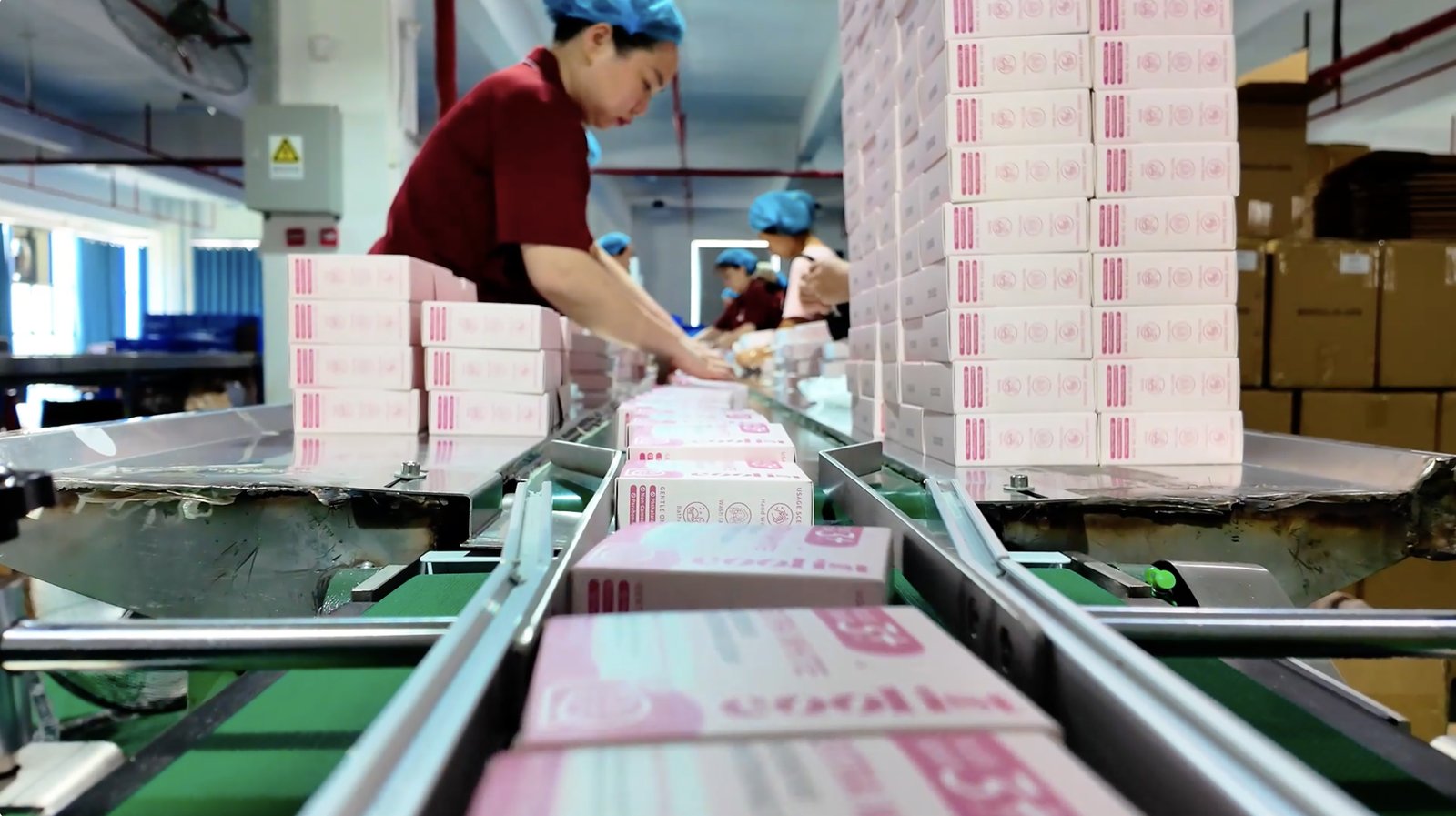
Printed pink boxes on a conveyor beside workers assembling packaging.
Send the intended sales route, whether the soap is wrapped, the bar dimensions, order quantity, preferred paper and finish, artwork, and the evidence needed for any environmental claim. Include photographs of a packaging problem or a reference pack when available. This gives the discussion a concrete selection problem rather than only a request for an eco-friendly box.
Use the custom soap packaging RFQ checklist to organise the quotation details after shortlisting a construction. For the soap specification itself, see SOVARUNE’s custom bar soap options. Contact SOVARUNE with your sample requirements and the packaging decisions you want to compare.


