Flexible project entry · dependable scale-up • Global soap manufacturing support
Flexible project entry · dependable scale-up • Global soap manufacturing support

SOVARUNE’s soap quality-control work covers raw materials, the soap-making process, forming, finished-product inspection, and packaging and traceability. For a buyer, the useful question is what will be checked for the soap being ordered, and how those checks relate to the agreed product requirements. A description of the process is a starting point; the inspection scope and acceptance criteria need to be discussed for the specific product.
This guide explains the stages covered by SOVARUNE’s production practices and the questions buyers can bring to a quality discussion. It focuses on the checks themselves, without treating one set of numerical limits as suitable for every formula, bar size or packaging choice.
| QC stage | Checks covered | What the buyer should confirm |
|---|---|---|
| Raw materials | The raw-material stage includes assessment of oils and their proportions, lye concentration and purity, and the stability of additives and fragrance. | If a particular ingredient is central to the product brief, ask which checks apply to it and how a proposed change would affect the inspection scope. |
| Soap-making process | During saponification, the process includes monitoring temperature and agitation, with testing for free alkali and unsaponified fats. | Ask which process checks are relevant to your formulation and which finished-product tests will follow. |
| Forming and physical-control work | SOVARUNE’s forming and physical-control work includes refining and air removal, moisture checks, stamping inspection and weight checks. | Ask how those requirements will be assessed and agree the relevant tolerance for the order. |
| Finished-product inspection | The finished-product stage includes pH testing, foam and hardness assessment, and accelerated-aging and microbiological checks. | For your order, ask which tests apply, how samples will be selected, and what results or records can be provided for review. |
| Packaging and traceability | Packaging and storage controls include consideration of moisture and oil barriers, together with batch identification for traceability from raw materials to finished goods. | Discuss the proposed wrapping or box with the soap specification, and ask how the batch marking will appear on the finished pack. |
The raw-material stage includes assessment of oils and their proportions, lye concentration and purity, and the stability of additives and fragrance. These are separate checkpoints: choosing an oil blend does not settle the preparation requirements for the lye, fragrance or colour used with it. SOVARUNE’s process includes checks on these inputs before considering the finished bar alone.
For a custom order, describe the intended colour, fragrance and formula requirements together. If a particular ingredient is central to the product brief, ask which checks apply to it and how a proposed change would affect the inspection scope. This keeps the discussion tied to the product you are buying.
During saponification, the process includes monitoring temperature and agitation, with testing for free alkali and unsaponified fats. The purpose of this stage is to examine the reaction process rather than judge the soap only by its appearance. Temperature settings and test limits belong to a defined production and inspection specification.
Ask which process checks are relevant to your formulation and which finished-product tests will follow. If you have an existing specification, share it for discussion. Avoid assuming that a limit used for another soap automatically applies to your order, even when the bars look similar.
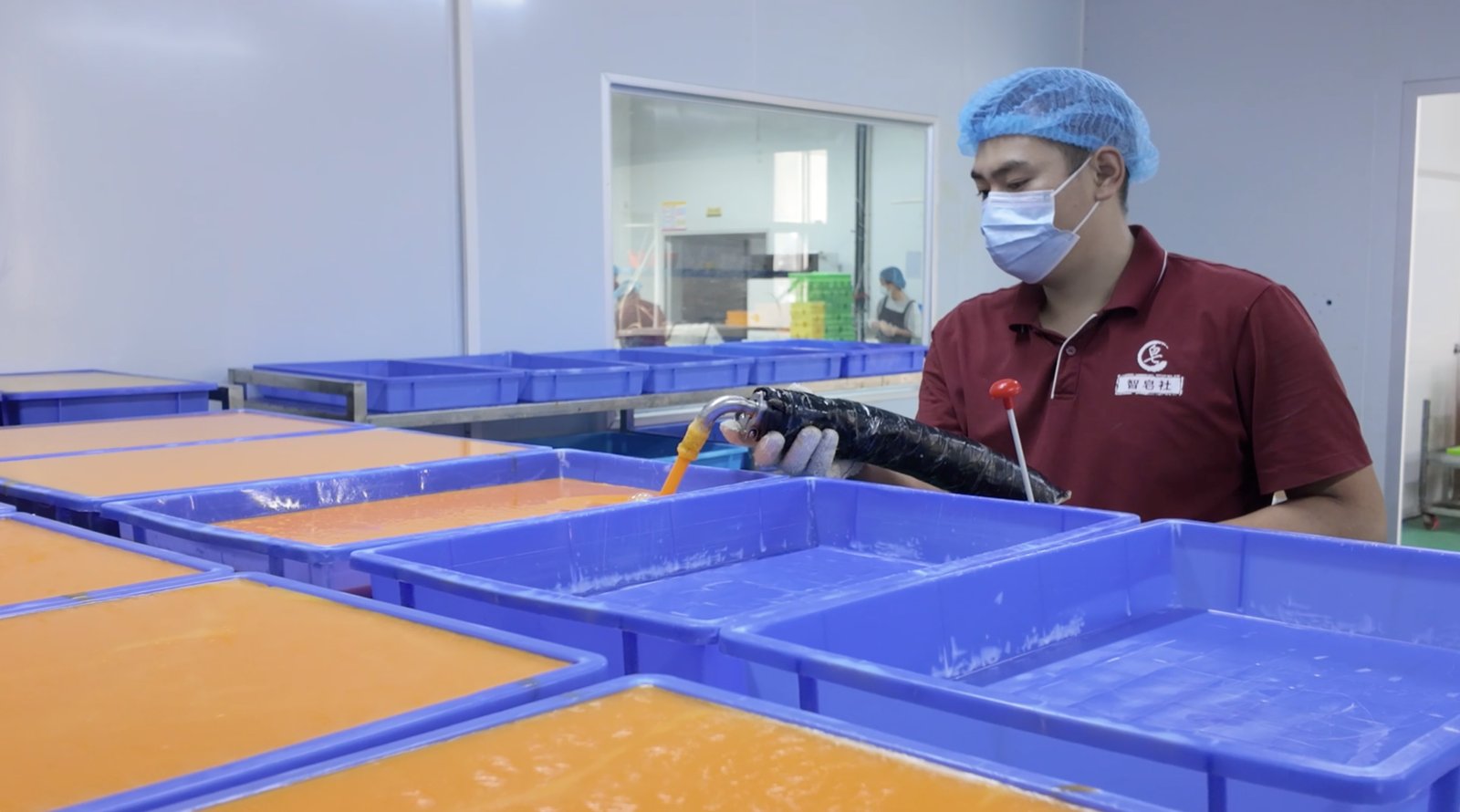
A worker pouring liquid into soap mixture trays during the soap production process.
SOVARUNE’s forming and physical-control work includes refining and air removal, moisture checks, stamping inspection and weight checks. The visible inspection points include logo definition, surface edges and the finished shape. Weight and moisture are addressed as distinct checks, alongside the appearance of the bar.
Buyers can make this discussion more concrete by identifying the details that matter most: the visibility of a stamped logo, the intended bar weight, or the appearance of the edges. Ask how those requirements will be assessed and agree the relevant tolerance for the order. A product image can communicate a visual preference, but it does not establish a weight tolerance or a test result.
The finished-product stage includes pH testing, foam and hardness assessment, and accelerated-aging and microbiological checks. These examine different characteristics and should be discussed separately. The availability of a test category does not, by itself, tell a buyer the result for a particular product.
For your order, ask which tests apply, how samples will be selected, and what results or records can be provided for review. Confirm the methods, criteria and checking frequency with SOVARUNE rather than assuming that every listed test is performed at the same frequency. If you require a particular report, raise that requirement before treating it as part of the order.
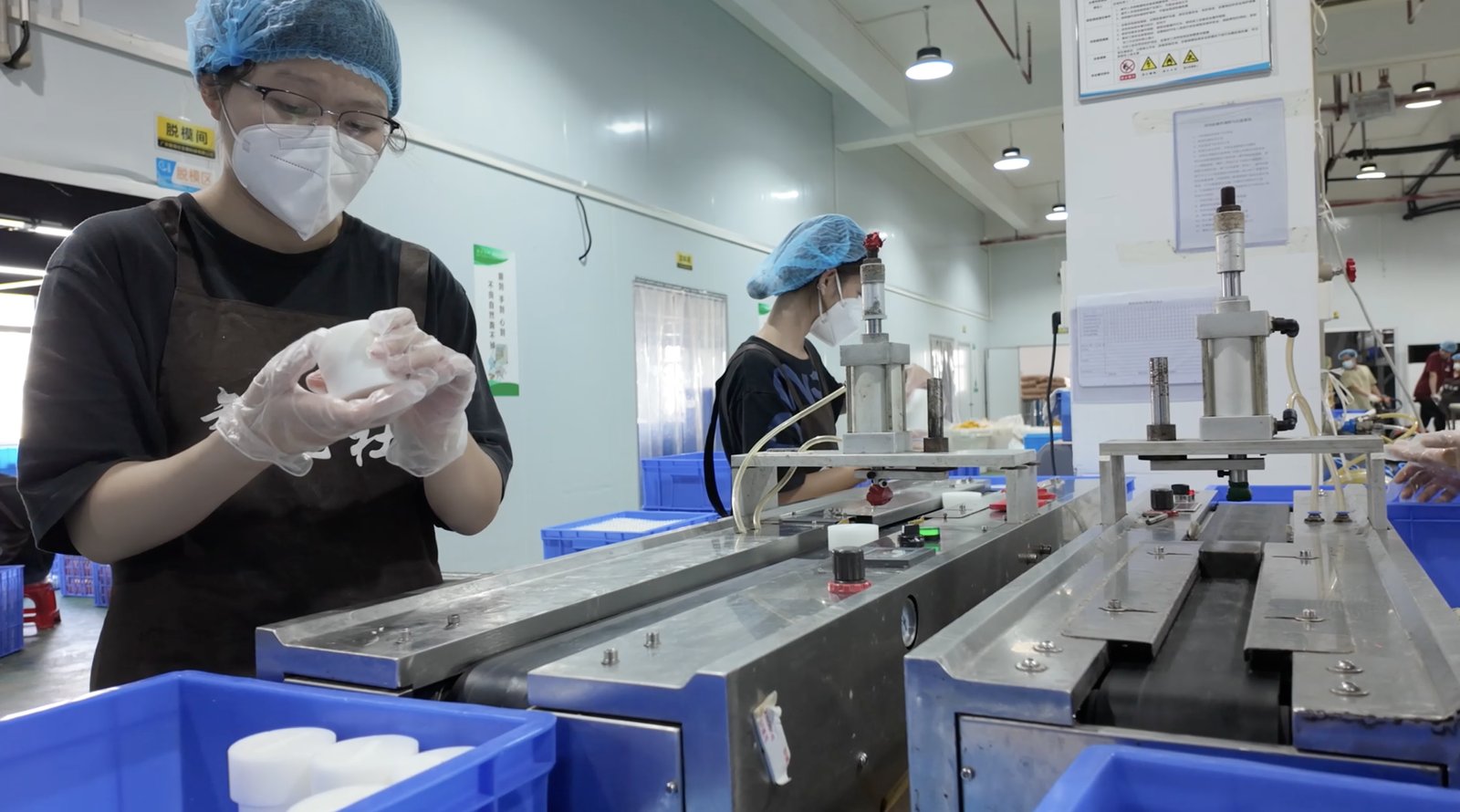
A worker inspecting a soap bar for quality control in a production facility.
Packaging and storage controls include consideration of moisture and oil barriers, together with batch identification for traceability from raw materials to finished goods. Packaging therefore belongs in the quality discussion, alongside the soap’s dimensions and physical characteristics.
Discuss the proposed wrapping or box with the soap specification, and ask how the batch marking will appear on the finished pack. For the broader information needed when requesting a soap-and-packaging quotation, use the custom soap packaging RFQ checklist.
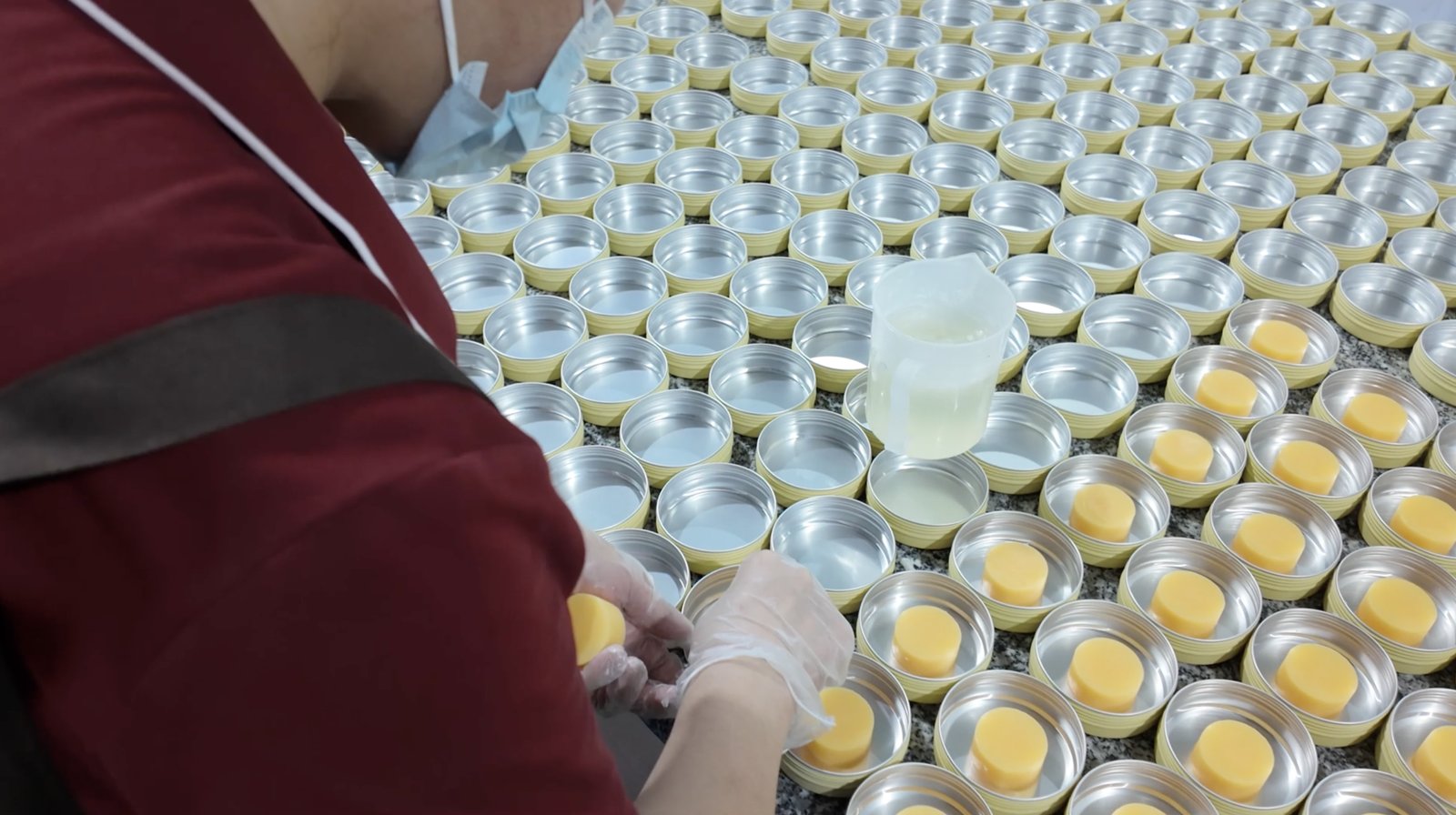
A worker carefully placing soap into containers as part of the packaging process.
To discuss a custom bar soap project, send SOVARUNE the product description, intended weight, appearance references and packaging requirements. Add any inspection criteria or reports your purchasing team requires. Ask the team to confirm the applicable checks and any points still to be agreed before proceeding.
Email official@sovarune.com with your brief, or visit the Contact Us page. Keeping product requirements and inspection expectations together gives both sides a clearer basis for discussing the quality of the soap you intend to order.


